
Hereditary cancer. From 26 to 92 genes.
Targeted whole-gene analysis · WGS + PRS
26 genes for inherited breast cancer predisposition, with expansion to a 92-gene hereditary cancer panel. Clinical WGS at a mean depth >30×, with PRS for breast, ovarian and prostate cancer.

The right panel, from the first test.
Targeted whole-gene analysis, with a scope selected according to the clinical indication and personal and family history.
Targeted analysis of complete genes.
A focused panel for genetic predisposition to breast cancer.
A shared genomic foundation. An analysis scope tailored to personal and family history.
Memorial Sloan Kettering Cancer Center
Genetic testing after a cancer diagnosis, with broader access criteria.
The study supports broader testing for inherited predisposition beyond a single age threshold. This approach provides a scientific reference for expanding genetic assessment.
of pathogenic variant carriers in the study would have been missed if diagnosis before age 50 had been the sole testing criterion.
Inherited findings also occur in late-onset cancer.
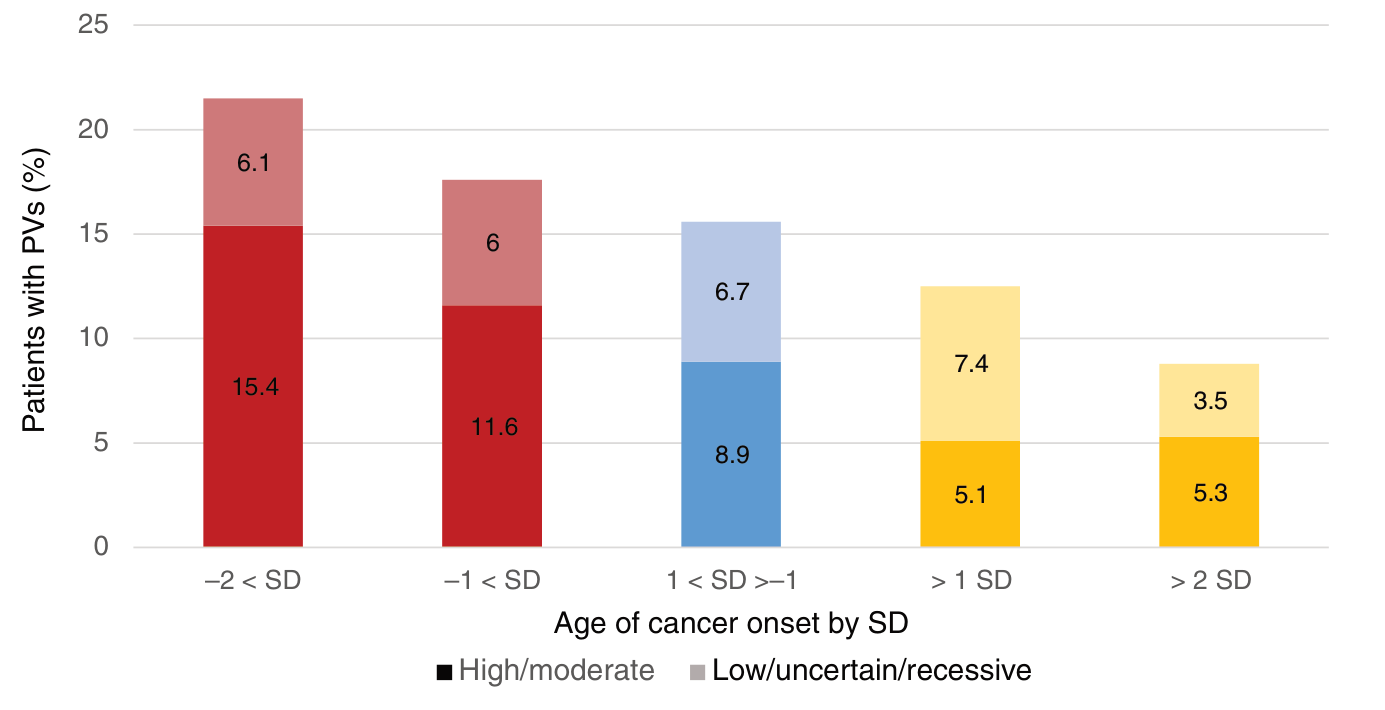
Figure 2B. Age at onset is compared with the mean age for the corresponding tumour type. Red: early onset; blue: average onset; yellow: late onset. SD: standard deviation.
Darker shades: high- or moderate-penetrance genes. Lighter shades: low or uncertain penetrance, or recessive carrier status.
These numbers describe the study and do not measure the accuracy of the NeoScreen service. The 32 tumour types describe the study population. NeoScreen provides its service independently of MSK.
Genes with clinical significance
The final scope of analysis is selected according to the clinical question. It focuses on BRCA1 and BRCA2 and other predisposition genes, such as TP53, PALB2, ATM and CHEK2. Associations and levels of risk differ between genes, so each finding requires specialist interpretation.

The 26-gene and 92-gene panels are defined testing options. The platform also supports customised panels to address the clinical question. New panels can be configured in seconds using existing WGS data; clinical interpretation and reporting follow the established assessment process.
BRCA1 · BRCA2
TP53 · PALB2
ATM · CHEK2
Additional genes according to the indication and history
What WGS adds
Whole genome sequencing creates a broad foundation of data for targeted clinical analysis and future reassessment. Alongside protein-coding regions, it allows investigation of selected non-coding and intronic regions within the method's validated limits.
Mean coverage of >30× describes the average sequencing depth across the genome. The quality of the final result also depends on coverage of individual regions, sample quality, bioinformatic analysis and clinical assessment. This number alone does not translate into a percentage of diagnostic accuracy.
One genome. Two complementary analyses.
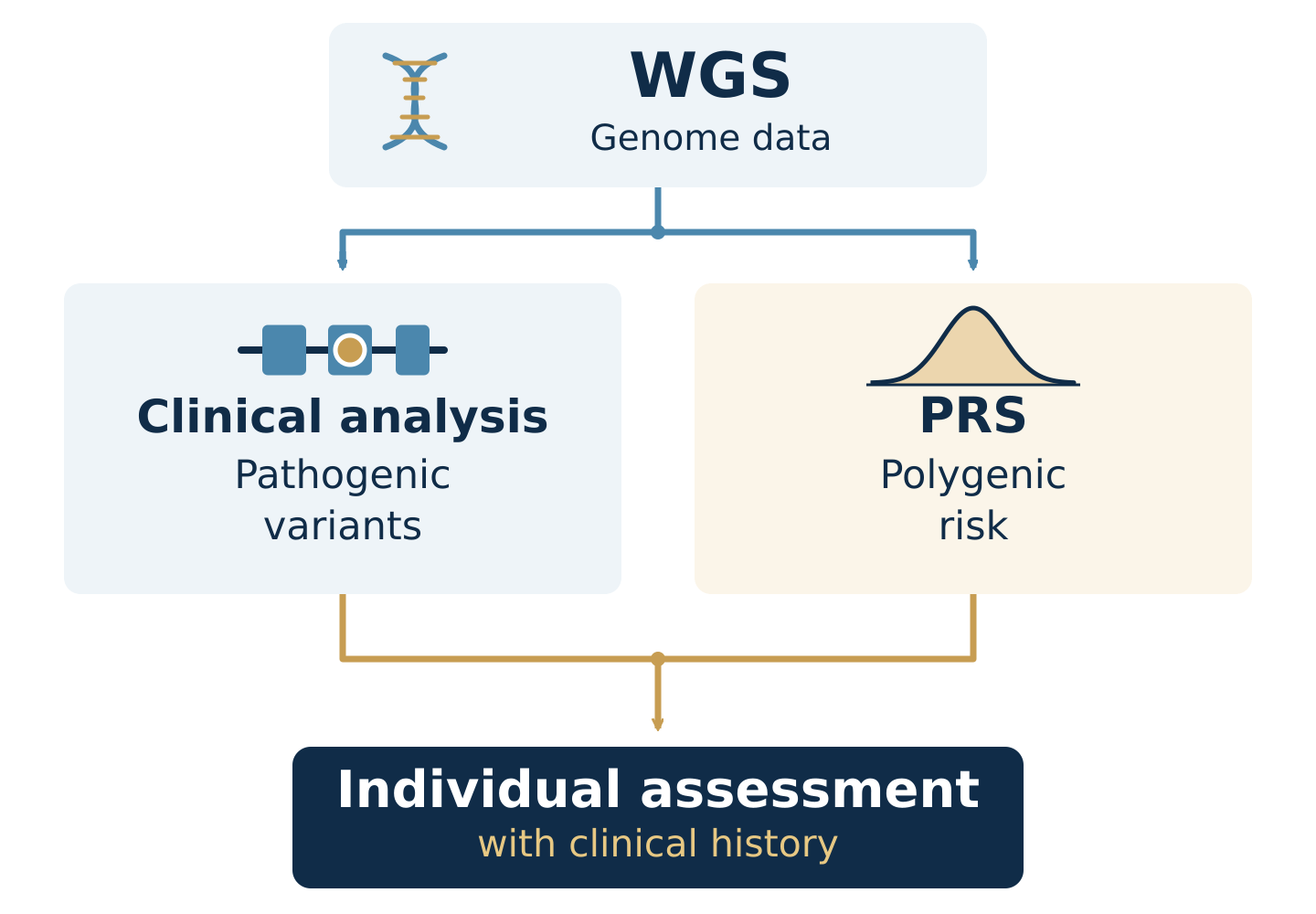
Schematic illustration of the combined approach. Interpretation brings together gene findings, an appropriate PRS, and personal and family history.
Open at full sizeIntronic variants and RNA splicing
Some variants may affect how sections of RNA are joined together, a process known as splicing. NeoScreen's platform supports assessment of intronic variants and computational prediction of their potential effects on splicing.

A prediction is one element of interpretation. It is considered alongside the clinical presentation, published evidence and other genetic data. Where needed and feasible, RNA analysis or another confirmatory test may be proposed to investigate the actual functional consequence.
How RNA reveals splicing
PRS: your position within a risk distribution
A Polygenic Risk Score combines the contributions of many common variants into one score. The service includes separate PRS for breast, ovarian and prostate cancer, interpreted appropriately for the relevant model and reference population.
A person's position on a PRS curve compares their score with the reference population. For example, the 90th percentile does not mean a 90% probability of developing cancer. Absolute risk over a specific period is calculated by combining further information.
Breast
polygenic information combined with genes and personal factors.
Ovarian
additional predisposition information within an overall clinical assessment.
Prostate
a separate PRS assessed within the appropriate risk model.
Polygenic predisposition at a glance.
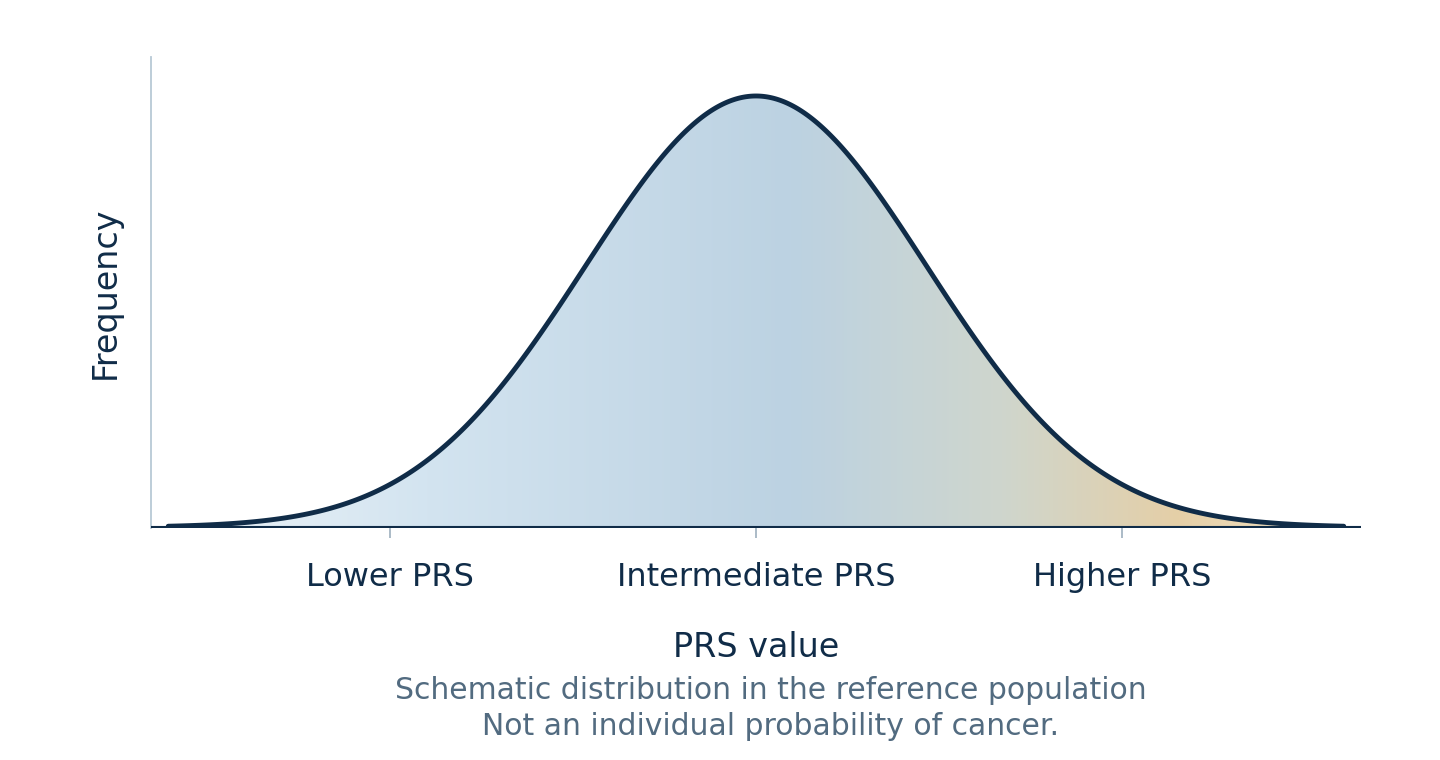
The 90th percentile does not mean a 90% probability of cancer. This is a schematic diagram with no individual results or clinical thresholds.
Open at full sizeBRCA and PRS: four different combinations
The BRCA result and PRS answer different, complementary questions. A low PRS does not cancel out a pathogenic or likely pathogenic BRCA variant. Equally, the absence of a pathogenic finding in the genes examined does not mean zero risk.
Pathogenic BRCA + higher PRS
both findings contribute to the assessment.
Pathogenic BRCA + lower PRS
the BRCA finding remains clinically significant.
No pathogenic finding + higher PRS
polygenic predisposition may add useful information.
No pathogenic finding + lower PRS
the assessment continues to consider history and other factors.
BRCA and PRS: four combinations.
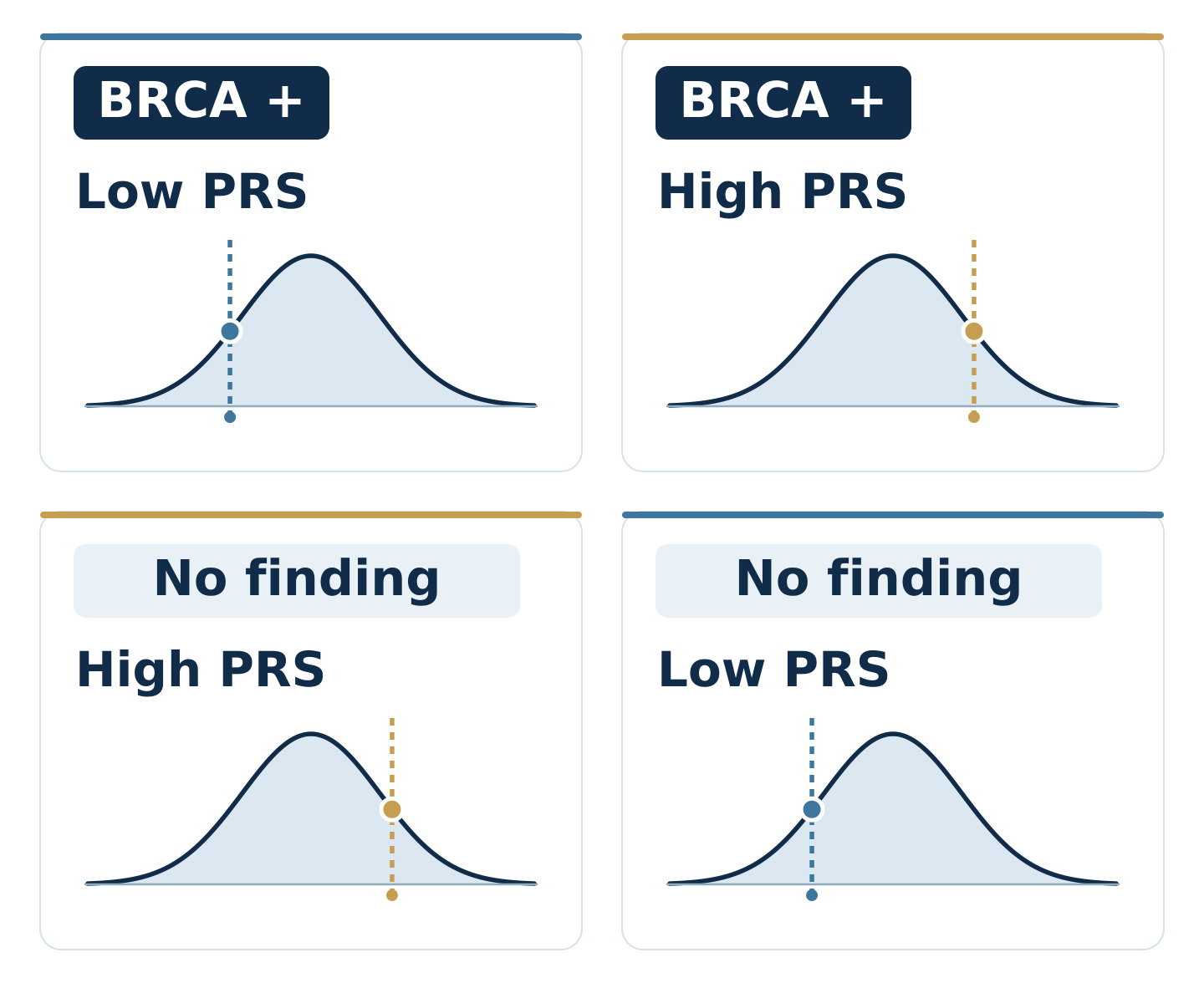
A low PRS does not override a pathogenic BRCA finding. BRCA + means a pathogenic or likely pathogenic variant, not a VUS. “No finding” means no pathogenic finding in the genes analysed.
Open at full sizeBOADICEA / CanRisk: history is part of the analysis
Accurate recording of personal and family history is an essential part of the assessment. Within CanRisk, the BOADICEA models concern breast and ovarian cancer, while CanRisk-Prostate is used for prostate cancer. Model selection and interpretation are performed by an appropriately qualified healthcare professional.

NeoScreen's existing breast cancer risk assessment form remains available to record personal and family history. Before completing it, it helps to know which relatives have had cancer, the cancer type, age at diagnosis and any previous genetic result.
Sources & evidence ↓Who can discuss testing with their clinician
Testing is selected individually. It may be relevant to people with a personal history of cancer, families with a known pathogenic variant or a history suggestive of hereditary predisposition, and people whose clinician considers a more complete risk assessment useful.
Testing for hereditary predisposition differs from molecular analysis of the tumour itself. The former examines variants that may also be relevant to relatives; the latter examines characteristics of cancer tissue to address specific clinical questions.
Sources & evidence ↓From the first question to clinical interpretation
The value of the test lies in using the result on the basis of sound evidence. NeoScreen connects laboratory information with the clinical question and supports discussion with the treating clinician.
1. Recording the indication, personal history and family history.
2. Information, consent and instructions for the appropriate sample.
3. WGS, quality control and analysis of the selected range of genes.
4. Calculation and interpretation of the appropriate PRS.
5. Combined assessment, a results report and genetic counselling.
6. Discussion of next steps and, where indicated, informing or testing relatives.
Frequently asked questions
26 or 92 genes: which panel is appropriate?
The 26-gene panel focuses on inherited breast cancer predisposition. The 92-gene panel extends the assessment to a broader range of hereditary cancer syndromes. Selection is guided by the indication, clinical history and genetic counselling.
What does whole-gene analysis mean?
The assessment uses WGS data across the selected genes, including coding and clinically relevant non-coding regions. Regional coverage and the variant classes reported are defined by the validated protocol and laboratory quality control.
Does a positive result mean I have cancer?
Identifying a pathogenic predisposition finding indicates increased genetic risk, not the presence of cancer. Its significance is discussed with the clinician in the context of the specific gene and history.
What is a variant of uncertain significance (VUS)?
It is a finding for which the available evidence is not yet sufficient for reliable classification as pathogenic or benign. It is not equivalent to a pathogenic BRCA variant and is not treated as a confirmed positive diagnosis.
What if BRCA is positive and PRS is low?
A pathogenic or likely pathogenic BRCA variant remains clinically significant. PRS adds information to the assessment; it does not erase the BRCA finding or the corresponding monitoring needs.
Is an ovarian PRS a stand-alone screening test?
No. It provides predisposition information that is considered alongside genes, family history and clinical factors. The next steps are determined through medical assessment.
Can new genes be added in the future?
WGS generates data that can be reassessed. The option of reanalysis, the new scope and any need for additional testing are evaluated according to the new clinical question, data quality and the terms of the service.
What sample is needed, and when will I receive a result?
The NeoScreen team provides sampling instructions and the turnaround time for the agreed scope of testing. If confirmation, testing of relatives or RNA analysis is needed, you will be informed about the additional stages.
Sources & scientific evidence
Service description: NeoScreen information brochure, October 2026 edition, p. 9. The detailed WGS + PRS description follows NeoScreen's hereditary cancer information programme.
- Stadler et al. · Universal Germline Genetic Testing after a Diagnosis of Cancer · Cancer Discovery, 2026 ↗
- Witt et al. · Clinical genome sequencing in hereditary breast and ovarian cancer · The Breast, 2025 ↗
- Barnes et al. · PRS and breast/ovarian cancer risk in BRCA1/2 carriers · Genetics in Medicine, 2020 ↗
- CanRisk · BOADICEA and CanRisk-Prostate · University of Cambridge ↗
- ClinGen SVI · Interpreting predicted and observed effects on splicing ↗
- National Cancer Institute · Genetic Testing for Inherited Cancer Risk ↗
- National Cancer Institute · BRCA Gene Changes: Cancer Risk and Genetic Testing ↗
Knowledge becomes care.NeoScreen · 5,000+ WGS / WES analyses
Scientific Director: Ioannis L. Loukas, Professor, National and Kapodistrian University of Athens
Prevention begins with your own story.
Discuss with NeoScreen which analysis is appropriate for your personal and family history.
